Pinhole Leak Detection & Repair in Placentia, CA
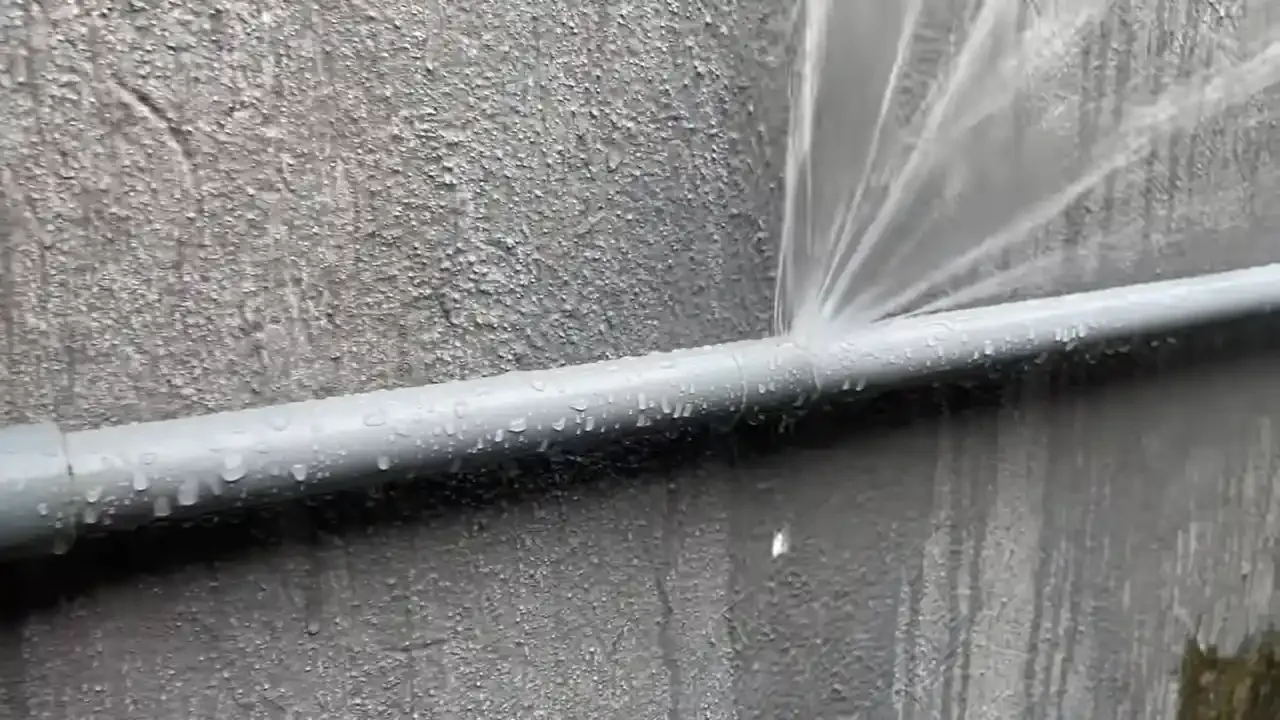
Placentia has the hardest municipal water supply of any California city in our network. Golden State Water's Placentia-Yorba Linda system blends groundwater pumped from the Orange County Groundwater Basin with imported Colorado River Aqueduct and State Water Project supply. The local groundwater component picks up calcium and magnesium as it moves through Carbon Canyon watershed soils, pushing total hardness to 12 to 18 grains per gallon. At that mineral concentration, scale deposits accumulate inside copper pipe walls, disrupt the protective oxide layer that normally gives copper its corrosion resistance, and create the conditions for internal pitting. Pitting produces pinhole leaks.
A pinhole leak is a perforation smaller than the diameter of a pencil tip. It releases a slow drip that wets insulation, spreads through wall cavities, and creates mold conditions over weeks before any visible staining appears at the surface. By the time a homeowner notices a brown stain on the ceiling or a soft patch in the drywall, the structural damage behind it is usually substantial. Green or blue staining at copper pipe joints, a verdigris crust that forms where mineral-laden water contacts oxidized copper, is the earliest visible sign and the one to act on immediately.
If you are seeing blue-green staining around pipe joints in your North Placentia or Bradford Place home, or if your Golden State Water bill has risen without any change in usage, call (714) 750-8637 for a same-day pinhole inspection.
Why Placentia Copper Is in the Failure Window Right Now
The 1950s to 1960s post-war tract homes that fill North Placentia, South Placentia, Heritage Park Placentia, and West Placentia were plumbed in copper when those neighborhoods were built. That copper has now been in service for 60 to 70 years, carrying water that tests at 12 to 18 grains of hardness throughout its service life. Copper supply pipe in soft-water conditions can last 80 years or longer. In hard-water conditions at this concentration, the expected service life is shorter, and the failure mode is almost always internal pitting that produces multiple pinhole leaks across the system rather than a single isolated breach.
The 1970s to 1980s expansion-era homes in East Placentia and Bradford Place are also entering the mid-failure range. Some of those homes were plumbed in polybutylene gray plastic pipe instead of copper. Polybutylene has its own failure history: it becomes brittle and cracks at fittings after 20 to 30 years of service. See our pipe leak detection page for polybutylene-specific details.
One pinhole leak in a 1960s Placentia home often signals system-wide failure.
(714) 750-8637Detection Approach
Acoustic listening equipment detects the sound of pressurized water escaping a pinhole behind a wall or under a floor without any demolition. Moisture meters confirm elevated moisture content in building materials at suspected locations. For leaks suspected inside walls, thermal imaging identifies the temperature differential caused by evaporative cooling at the wet spot. We pinpoint before we cut any access opening.
Repair Options
A single pinhole in a copper line that otherwise tests at normal pressure can be repaired at the breach point. The more common scenario in Placentia's 1950s-1960s housing stock is a system where multiple sections of pipe show pitting and reduced wall thickness. In that case, spot repair is the wrong investment. The right conversation is about a full or partial repipe, replacing the copper that has reached end-of-life with PEX-A that handles hard water more tolerantly. Our whole-house repipe page covers the scope and sequencing. We run that conversation on evidence from pressure testing the system, not on assumptions about age alone.
For a pinhole leak inspection anywhere in Placentia's 92870 ZIP or adjacent North OC communities, call (714) 750-8637. We cover Old Town Placentia, Atwood, Bradford Place, the Kraemer Boulevard corridor, and all 29 service areas on the same dispatch line.
| Build Era | Supply & Drain Material | Representative Neighborhoods |
|---|---|---|
| Pre-1950 citrus-era | Galvanized supply lines and cast iron drains | Old Town Placentia, Downtown Placentia, Atwood |
| 1950s to 1960s post-war | Copper supply lines now in deep pinhole-failure range after 60 to 70 years of hard-water exposure | North Placentia, South Placentia, West Placentia, +1 more |
| 1970s to 1980s expansion-era | Copper supply lines in mid-failure range, some polybutylene gray plastic pipe | East Placentia, Bradford Place, Tuffree Park Area, +2 more |
| 1990s and newer | PEX dominant with some copper hybrid, PVC drains | Camino Loma Verde, Sanchez Reservoir Area |
Frequently Asked Questions
What makes Placentia's water so hard?
Golden State Water's Placentia-Yorba Linda system blends groundwater from the Orange County Groundwater Basin with imported Colorado River and State Water Project supply. The local groundwater picks up calcium and magnesium from Carbon Canyon watershed soils, producing hardness of 12 to 18 grains per gallon. That is the highest hardness level in any California city we cover.
Can I fix a pinhole leak myself?
Temporary pipe repair clamps and epoxy putty can slow a pinhole drip for a short period. They do not address the underlying pitting corrosion. In a Placentia home with 1950s-1960s copper, a single confirmed pinhole leak is a signal that the adjacent pipe sections are at similar risk. A licensed plumber should assess the system before a temporary fix becomes a second emergency.
How do pinhole leaks affect mold growth?
A pinhole leak releasing even a small volume of water into a wall cavity creates sustained elevated humidity in an enclosed space. Mold colonizes damp cellulose building materials within 24 to 48 hours under those conditions. By the time staining is visible at the surface, mold remediation is usually required in addition to the plumbing repair.
Is a whole-house repipe necessary after one pinhole leak?
Not automatically. Pressure testing the system identifies which sections have thinned walls or active pitting. If the failure is isolated and the rest of the system tests at full pressure, a spot repair is appropriate. If pressure testing reveals multiple weak sections, repipe is the better long-term investment. We give you the test results and the options without a sales agenda.
How long does pinhole leak repair take?
A single pinhole repair access, cut, solder, and patch takes two to four hours. A partial repipe of a failing section takes one day. A full whole-house repipe in a typical Placentia single-family home takes two to three days.
To schedule service, call (714) 750-8637. CSLB licensed leak detection specialists serving all of North Orange County.
Call Placentia Leak Repair Experts
24/7 detection and repair across North Orange County. CSLB licensed.
24/7 Emergency Response | CSLB Licensed | Old Town to Kraemer Corridor