Pipe Leak Detection & Repair in Placentia, CA
Pipe leak detection in Placentia requires matching the diagnostic approach to the specific pipe material involved. Every housing era in this city left a different pipe material in the walls, and each material fails in a distinct way under the stress of Golden State Water's groundwater-blend supply, which runs at 12 to 18 grains per gallon of hardness. Finding the leak efficiently means knowing what you are looking for before the first tool is applied.
Pre-1950 homes in Old Town Placentia and the historic Atwood district carry galvanized steel supply lines. Galvanized pipe corrodes from the inside out as a zinc coating depletes, and the corrosion products accumulate as scale that restricts flow long before a visible exterior rust spot appears. The failure mode is slow and internal, often presenting first as reduced water pressure at fixtures throughout the home rather than as a drip or wet wall. When galvanized steel does breach, the failure is usually at a threaded fitting joint where the wall is thinnest and where corrosion is concentrated by galvanic action at the steel-brass connection.
If your pre-1950 Placentia home is showing reduced flow at multiple fixtures simultaneously, call (714) 750-8637. Galvanized line inspection combined with pressure testing identifies whether the restriction is scale accumulation or an active leak.
Copper Pipe Failure in North Placentia and South Placentia
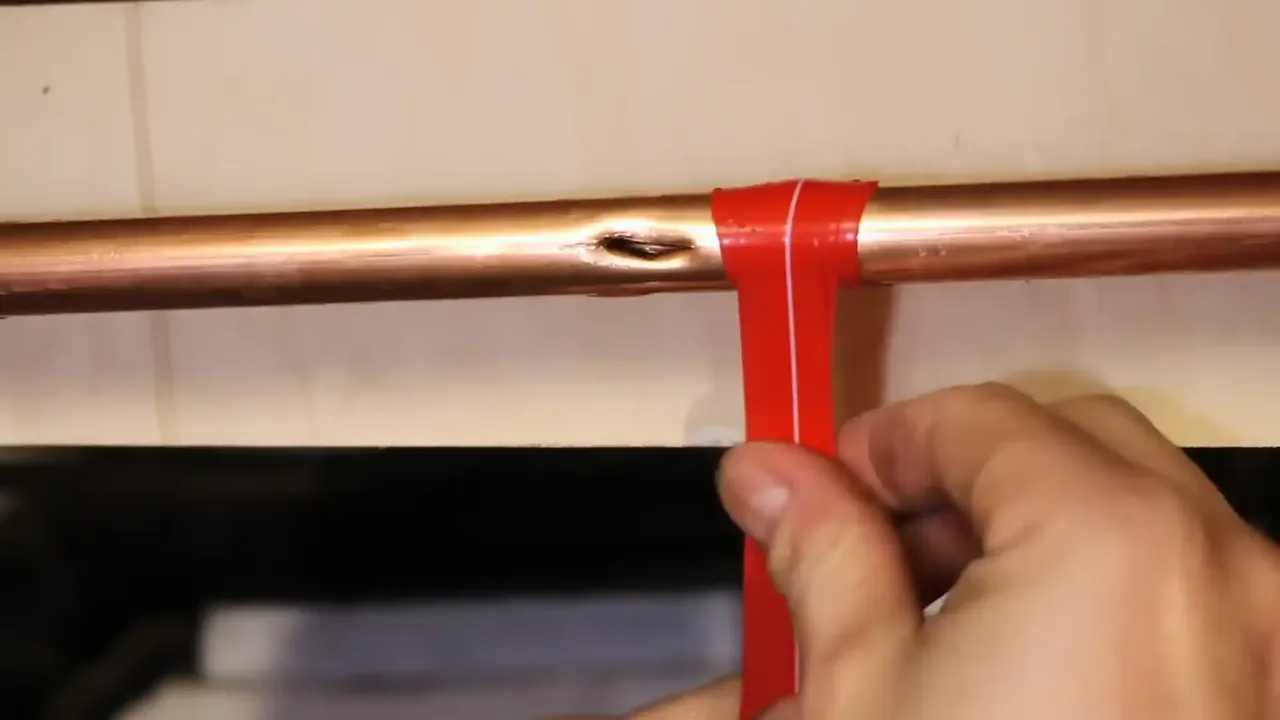
The 1950s to 1960s post-war tract homes across North Placentia, South Placentia, Heritage Park Placentia, and West Placentia were plumbed in copper. That copper now carries 60 to 70 years of hard-water exposure. At 12 to 18 grains per gallon, internal pitting corrosion attacks the copper wall from inside, producing pinhole perforations that release slow drips into wall cavities and subfloor spaces before any surface sign appears. The sound of water running at night with everything off, an unexplained jump in Golden State Water billing, or a soft patch in drywall are the triggers for inspection. See our dedicated copper pipe leak detection page for the full diagnostic sequence for this material.
Unexplained water bill increase or running-water sound at night? Call now.
(714) 750-8637Polybutylene Pipe in East Placentia and Bradford Place
A portion of the 1970s to 1980s expansion-era homes in East Placentia and Bradford Place were plumbed in polybutylene, a gray plastic supply pipe material that was common in that era and is now considered end-of-life throughout the plumbing industry. Polybutylene fails at fitting connections when the material becomes brittle with age, and it is particularly reactive to chloramine disinfectants used in treated water supplies. Failure is typically sudden at the fitting rather than gradual like copper pitting, and the water volume released before the failure is noticed can be significant. Identification requires either knowing the pipe material from the original home documents or visual inspection at exposed sections in the garage, utility closet, or under-sink cabinets.
PEX Pipe in Newer Placentia Construction
Newer construction in Camino Loma Verde and Sanchez Reservoir area developments uses cross-linked polyethylene, or PEX, which tolerates hard water substantially better than copper or galvanized steel. PEX failures occur at crimp ring or clamp ring fitting connections rather than along the pipe run itself. Signs include sudden pressure loss in one supply zone or visible water at a fitting connection in an exposed pipe run. See our PVC pipe leak detection page for plastic pipe repair methods that apply to PEX fittings as well.
For slab-level pipe failures regardless of material, see our slab leak detection page. The repair approach changes significantly when the pipe runs under concrete rather than through a wall or ceiling cavity.
For pipe leak inspection anywhere across Placentia's 92870 ZIP and North OC service area, call (714) 750-8637 any hour. Emergency dispatch available for active leaks flooding living spaces.
| Build Era | Supply & Drain Material | Representative Neighborhoods |
|---|---|---|
| Pre-1950 citrus-era | Galvanized supply lines and cast iron drains | Old Town Placentia, Downtown Placentia, Atwood |
| 1950s to 1960s post-war | Copper supply lines now in deep pinhole-failure range after 60 to 70 years of hard-water exposure | North Placentia, South Placentia, West Placentia, +1 more |
| 1970s to 1980s expansion-era | Copper supply lines in mid-failure range, some polybutylene gray plastic pipe | East Placentia, Bradford Place, Tuffree Park Area, +2 more |
| 1990s and newer | PEX dominant with some copper hybrid, PVC drains | Camino Loma Verde, Sanchez Reservoir Area |
Frequently Asked Questions
How do I know what pipe material is in my Placentia home?
Visual inspection at exposed pipe sections in the garage, under-sink cabinets, or near the water heater gives the clearest identification. Galvanized steel is gray-silver with threaded joints and visible rust scale. Copper is orange-to-brown with soldered joints. Polybutylene is gray plastic with insert fittings. PEX is flexible color-coded plastic with crimp or clamp ring fittings.
Can a pipe leak behind a wall be detected without cutting drywall?
Yes. Acoustic listening equipment amplifies the sound of pressurized water escaping a pipe behind a wall surface. Moisture meters confirm elevated moisture content in the drywall at the leak location. Thermal imaging identifies temperature differentials caused by evaporative cooling at wet spots. We confirm the location before any access opening is made.
Why is polybutylene pipe considered end-of-life?
Polybutylene degrades when exposed to oxidants present in treated municipal water, including chlorine and chloramines. The material becomes brittle at fitting connections over time, and failure is typically sudden rather than gradual. The plumbing industry and California courts have consistently treated polybutylene as a material requiring replacement rather than repair.
My water pressure dropped at all fixtures at once. Is that a pipe leak?
Simultaneous pressure drop at all fixtures usually indicates a main supply line problem, a pressure regulator valve failure, or severe scale accumulation in galvanized pipe reducing the effective pipe diameter. A localized pressure drop at one fixture or one zone suggests a branch line failure. Both warrant inspection.
To schedule service, call (714) 750-8637. CSLB licensed leak detection specialists serving all of North Orange County.
Call Placentia Leak Repair Experts
24/7 detection and repair across North Orange County. CSLB licensed.
24/7 Emergency Response | CSLB Licensed | Old Town to Kraemer Corridor