Copper Pipe Leak Detection & Repair in Placentia, CA
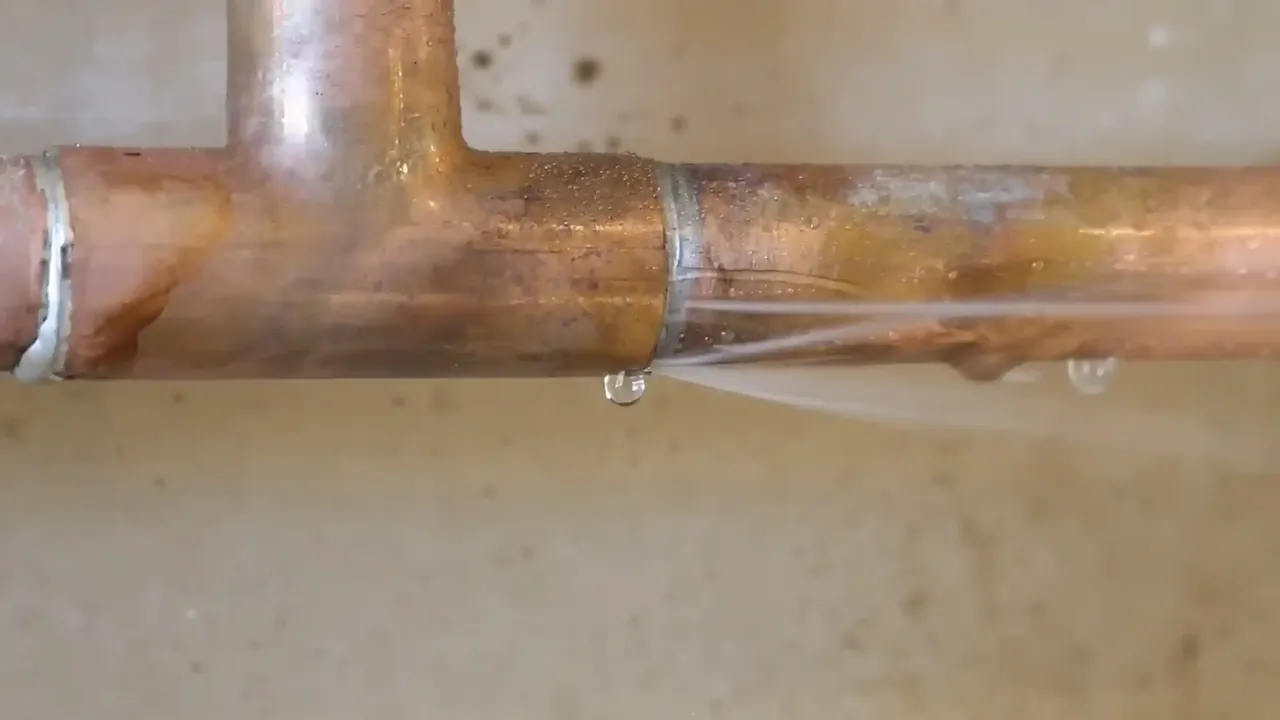
Copper pipe failure in Placentia follows a pattern that is more predictable and more accelerated than in most California cities. The cause is straightforward: Golden State Water's groundwater-blend supply tests at 12 to 18 grains per gallon of total hardness. That hardness level is at the top of the hard-water classification scale and represents the highest mineral concentration in any California city we cover. Copper develops its corrosion resistance under normal conditions by forming a stable cupric oxide layer on the interior pipe wall. Hard water at 12 to 18 grains per gallon disrupts that oxide formation, deposits calcium scale that creates localized concentration cells on the copper surface, and initiates the pitting process that eventually perforates the pipe wall.
The 1950s to 1960s post-war tract homes that fill North Placentia, South Placentia, Heritage Park Placentia, and West Placentia were all plumbed in copper. That copper has now been carrying Placentia's hard-water supply for 60 to 70 years. This cohort is in what materials engineers call the late-failure band: the probability of additional pinhole failures increases significantly with each year of continued hard-water service. A single confirmed pinhole leak in a home of this age is not an isolated event. It is a system-level signal.
If you have confirmed or suspected a copper pipe leak in your Placentia home, call (714) 750-8637 for a same-day inspection that covers the leak location and a pressure assessment of the surrounding pipe sections.
How Copper Pipe Pitting Progresses
Hard-water pitting on copper interior walls begins at microscopic surface irregularities where scale deposits disrupt the oxide layer. The pit deepens as the unprotected copper is exposed to the water flow, and the pit geometry creates a low-velocity zone that accelerates local mineral deposition and further corrosion. A pinhole breach forms when the pit penetrates the full wall thickness. At this stage the pipe exterior may look completely normal. There is no external rust or discoloration. The failure is entirely internal until water begins to escape the perforation.
The slow drip from a copper pinhole saturates insulation and building material fibers over weeks before any visible staining appears at the surface. The green or blue staining that eventually forms around pipe joints or at wall penetrations is oxidized copper carried by the water to the surface, not mold. Mold forms separately in the wet building materials and is typically already present by the time the surface stain is visible. See our wall leak detection page for the detection sequence when the failure is hidden inside a wall cavity.
Green staining at pipe joints or unexplained water bill? Call for same-day inspection.
(714) 750-8637Detection Methods for Copper Pipe Failures
Acoustic listening equipment detects the sound of pressurized water escaping a copper pinhole through insulation and building materials without any demolition. Moisture meters confirm elevated moisture content in drywall, subfloor, and ceiling materials at suspected locations. Pressure testing by section isolates the leaking branch from the rest of the supply system and narrows the failure to a specific pipe run. Thermal imaging identifies temperature differentials caused by evaporative cooling at the wet location when the failing pipe carries cold water, or by direct heat when it carries hot water.
Repair: Spot Repair Versus Repipe
A single confirmed pinhole in a copper line that pressure-tests clean throughout the rest of the system can be repaired at the breach point. In a 1950s to 1960s Placentia home, however, the full system pressure test is the deciding step. If adjacent sections show reduced pressure or if multiple weak zones are identified, spot repair at the single confirmed pinhole is the wrong investment. The remaining copper is at the same stage of hard-water pitting and will produce additional failures in the months that follow.
The appropriate response in that scenario is a full or partial repipe, replacing the failing copper with PEX-A, which handles Placentia's mineral-heavy water substantially better than copper. Our whole-house repipe page covers the scope, sequencing, and material options. We present the system pressure test results before any recommendation, so the decision is based on actual evidence rather than a default upsell.
For copper pipe inspection in any Placentia neighborhood, from Old Town to the Kraemer Boulevard corridor, call (714) 750-8637. Same-day response for active copper pipe leaks causing water damage.
| Build Era | Supply & Drain Material | Representative Neighborhoods |
|---|---|---|
| Pre-1950 citrus-era | Galvanized supply lines and cast iron drains | Old Town Placentia, Downtown Placentia, Atwood |
| 1950s to 1960s post-war | Copper supply lines now in deep pinhole-failure range after 60 to 70 years of hard-water exposure | North Placentia, South Placentia, West Placentia, +1 more |
| 1970s to 1980s expansion-era | Copper supply lines in mid-failure range, some polybutylene gray plastic pipe | East Placentia, Bradford Place, Tuffree Park Area, +2 more |
| 1990s and newer | PEX dominant with some copper hybrid, PVC drains | Camino Loma Verde, Sanchez Reservoir Area |
Frequently Asked Questions
How long does copper pipe last in Placentia's hard water?
In Placentia's 12 to 18 grain per gallon water, copper supply pipe in the 1950s to 1960s tract homes is now in the late-failure band at 60 to 70 years of service. In softer water conditions, copper can last 80 years or more. Placentia's sustained high mineral concentration shortens the reliable service life, and system-wide inspection is appropriate once the first pinhole appears.
What does green staining around copper pipe joints mean?
Green or blue staining around copper pipe joints or at wall penetrations is oxidized copper carried to the surface by mineral-laden water escaping a pinhole or a weeping joint. It is a clear indicator of active copper corrosion and an active, if small, leak. The stain itself is harmless, but it signals that the pipe wall has been compromised and that the leak will enlarge without repair.
Can copper pipe be repaired with epoxy or pipe repair clamps?
Temporary copper pipe repair clamps and two-part epoxy putty can reduce or stop a pinhole drip for a limited period. They do not address the underlying pitting corrosion, which continues to advance on both sides of the temporary repair. In a Placentia home with 1950s-1960s copper, a licensed plumber should assess the full system before a temporary fix becomes a second emergency.
What is the difference between copper type L and type M?
Type L copper has a thicker wall than Type M for the same nominal pipe diameter. Most 1950s to 1970s residential installations used Type M, which has the thinner wall and is more vulnerable to hard-water pitting penetrating the full wall thickness earlier. Identifying which type is installed informs how urgently the system-wide inspection results should be acted on.
To schedule service, call (714) 750-8637. CSLB licensed leak detection specialists serving all of North Orange County.
Call Placentia Leak Repair Experts
24/7 detection and repair across North Orange County. CSLB licensed.
24/7 Emergency Response | CSLB Licensed | Old Town to Kraemer Corridor