Ultrasonic Leak Detection in Placentia, CA
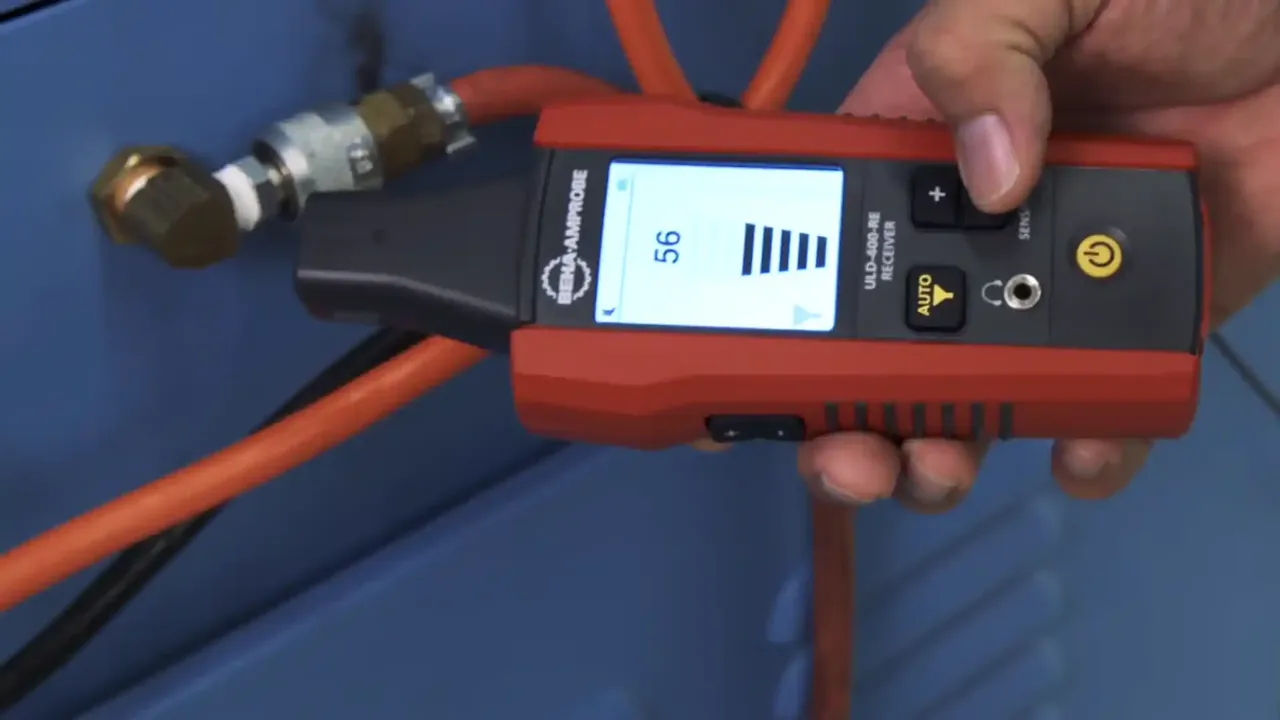
Ultrasonic leak detection uses sensors tuned to the high-frequency sound range above normal human hearing to detect the turbulent flow that pressurized water creates as it forces through a small pipe breach. When water under supply pressure escapes through a pinhole or a crack, the flow transitions from laminar to turbulent at the constriction point and generates acoustic energy across a broad frequency spectrum that extends well into the ultrasonic range. Ultrasonic sensors detect this energy with high sensitivity while filtering out the lower-frequency ambient noise, such as HVAC operation, traffic, and building occupant activity, that can mask conventional acoustic detection on busy urban or suburban sites.
In Placentia, where the primary leak type is a copper pipe pinhole driven by Golden State Water's 12 to 18 grain per gallon hard-water corrosion, the turbulent flow at the pinhole breach produces a strong ultrasonic signal. The signal propagates through the surrounding concrete or soil and is detectable at the surface above the failure. Ultrasonic detection is particularly useful in Placentia homes where ambient noise from the SR-57 Freeway corridor, from neighboring property HVAC systems, or from heavy traffic on Kraemer Boulevard or Yorba Linda Boulevard would reduce the signal-to-noise ratio for conventional acoustic listening. The frequency filtering of ultrasonic equipment suppresses these low-frequency noise sources and isolates the high-frequency leak signal.
For a suspected supply line failure in a Placentia home where ambient noise has made conventional acoustic detection difficult, call (714) 750-8637 for ultrasonic detection. Same-day scheduling across all 29 service areas.
Applications in Placentia Homes
Ultrasonic detection is applied when conventional acoustic methods produce ambiguous results due to noise interference, when the supply line runs beneath a portion of the slab that is covered by heavy furniture or fixed cabinetry that prevents direct ground microphone placement, or when the suspected failure is in a pressurized system at lower-than-normal operating pressure where the acoustic signal from the breach is weaker. The ultrasonic sensor can be placed on the slab surface adjacent to cabinets or near walls without requiring direct line-of-sight access to the area above the suspected failure. For the full combination of detection methods used on a typical Placentia slab leak call, see our non-invasive leak detection page, which describes how ultrasonic, acoustic, thermal, and pressure methods are sequenced together.
Ambient noise making acoustic detection difficult? Ultrasonic filtering isolates the signal.
(714) 750-8637Ultrasonic Detection for Pressurized Systems
Ultrasonic detection applies most effectively to pressurized supply systems where the turbulent flow at the breach is sustained. It is less effective for gravity drain system leaks, which do not produce significant turbulent flow, and for very low pressure failures where the leak volume is too small to generate a detectable ultrasonic signature. In Placentia's supply system, which operates at Golden State Water distribution pressures typically between 65 and 90 PSI before the pressure regulator valve, the pressure at a supply pipe breach is sufficient to generate a strong ultrasonic signature. For the pressure testing sequence that confirms supply system pressure before detection methods are applied, see our electronic leak detection page. For acoustic detection as the primary companion method to ultrasonic work on Placentia slab calls, see our acoustic leak detection page.
Ultrasonic leak detection across all 29 Placentia service areas and adjacent North OC cities. Call (714) 750-8637 for scheduling on any supply line failure call.
| Build Era | Supply & Drain Material | Representative Neighborhoods |
|---|---|---|
| Pre-1950 citrus-era | Galvanized supply lines and cast iron drains | Old Town Placentia, Downtown Placentia, Atwood |
| 1950s to 1960s post-war | Copper supply lines now in deep pinhole-failure range after 60 to 70 years of hard-water exposure | North Placentia, South Placentia, West Placentia, +1 more |
| 1970s to 1980s expansion-era | Copper supply lines in mid-failure range, some polybutylene gray plastic pipe | East Placentia, Bradford Place, Tuffree Park Area, +2 more |
| 1990s and newer | PEX dominant with some copper hybrid, PVC drains | Camino Loma Verde, Sanchez Reservoir Area |
Frequently Asked Questions
What is the difference between acoustic and ultrasonic leak detection?
Acoustic leak detection listens in the human hearing frequency range using amplified ground microphones. Ultrasonic detection uses sensors tuned to frequencies above the human hearing range, typically above 20 kHz, where the turbulent flow at a pressurized leak breach generates strong signals. The ultrasonic range is less affected by low-frequency ambient noise such as traffic or HVAC operation, making it more effective in noisier environments.
Does ultrasonic detection work through thick concrete?
Ultrasonic signals attenuate more rapidly through dense concrete than lower-frequency acoustic signals. Ultrasonic detection is most effective for failures within the upper few inches of the slab or for surface-accessible detection at exposed pipe sections. For deep under-slab failures, lower-frequency acoustic correlation typically provides better depth penetration. The two methods are used together on complex detection calls rather than exclusively.
Can ultrasonic detection find very small leaks?
Yes. A pressurized pinhole that produces minimal visible water output can still generate a detectable turbulent flow signal in the ultrasonic range. The signal strength decreases with leak size and with distance from the sensor, but small pinholes in Placentia's copper supply lines at normal Golden State Water distribution pressure are typically detectable at the slab surface above the failure.
Is ultrasonic detection safe for occupied homes?
Yes. Ultrasonic detection equipment generates no emissions, no radiation, and no chemical agents. The sensor reads ambient ultrasonic signals present at the surface without adding any energy to the structure. There is no health or safety concern for occupants during or after an ultrasonic detection survey.
To schedule service, call (714) 750-8637. CSLB licensed leak detection specialists serving all of North Orange County.
Call Placentia Leak Repair Experts
24/7 detection and repair across North Orange County. CSLB licensed.
24/7 Emergency Response | CSLB Licensed | Old Town to Kraemer Corridor