Thermal Imaging Leak Detection in Placentia, CA
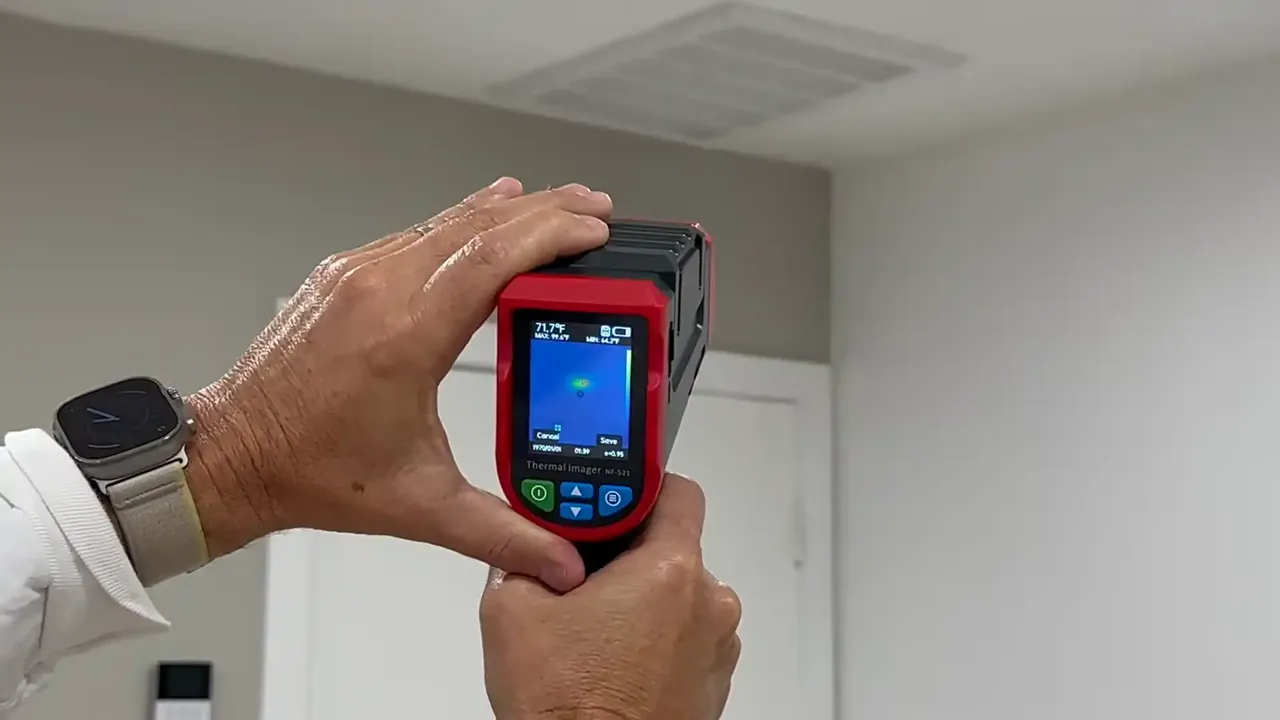
Thermal imaging leak detection uses an infrared camera to read temperature differences at wall, floor, and ceiling surfaces caused by the presence of water behind or beneath those surfaces. Water has a higher thermal mass than the building materials surrounding it, which means it heats and cools more slowly. A wet area in a wall cavity or beneath a slab surface maintains a temperature that differs from the surrounding dry material for hours after the surrounding material has equilibrated to the ambient temperature. That temperature difference, visible to an infrared camera as a color or shade contrast on the thermal image, reveals the location and approximate extent of the moisture without any opening in the wall or floor surface.
Thermal imaging is particularly effective in Placentia for two reasons specific to this city's construction and water profile. First, Placentia's slab-on-grade construction means every supply line failure eventually produces a temperature anomaly at the slab surface above the failure point. A hot-water line pinhole creates a warm zone at the slab surface. A cold-water line pinhole creates a cool zone through evaporative cooling of the escaping water. Both are detectable with thermal imaging when the temperature differential between the wet zone and the surrounding dry concrete is large enough, which is typically the case when the leak has been active long enough to saturate a section of mortar bed beneath a tile floor. Second, Placentia's warm climate means the interior of homes is rarely cold enough to reduce the temperature differential between a wet zone and dry surrounding material to below the camera's detection threshold.
For wall staining, soft drywall, or a slab temperature anomaly that you have noticed underfoot, call (714) 750-8637 for a thermal imaging assessment. Same-day scheduling available across all Placentia neighborhoods.
Thermal Imaging for Slab Leaks
A slab survey with a thermal camera is most effective when conducted under conditions that maximize the temperature differential between the wet zone and the surrounding dry slab. The optimal time is early morning in Placentia, after the cool overnight temperatures have reduced the slab surface temperature and before daytime solar loading heats the slab uniformly. A hot-water line failure produces a warm zone that stands out clearly against the cooled slab background. A cold-water line failure produces a cool zone that is harder to distinguish from the naturally cooled morning slab but becomes more visible as the day warms and the dry concrete heats faster than the wet section. For slab leaks confirmed by thermal imaging, acoustic detection then pinpoints the exact failure location within the warm or cool zone identified on the thermal image. See our slab leak detection page for the full detection sequence where thermal imaging and acoustic methods work together.
Warm spot underfoot or stained drywall? Thermal imaging identifies the moisture before demo.
(714) 750-8637Thermal Imaging for Wall and Ceiling Leaks
Wall and ceiling surfaces in Placentia homes show thermal anomalies from supply pipe pinholes behind the drywall, from drain connection weeps in wall cavities, and from shower pan liner failures saturating mortar beds beneath tile floors. The thermal camera reads these anomalies through the drywall or tile surface without any penetration. The shape and location of the thermal anomaly distinguishes the source type: a vertical cold streak down a wall indicates a cold-water pipe failure at a point above the streak, where the water is running down the wall cavity. A diffuse warm zone at the base of a shower wall indicates mortar bed saturation from a liner or grout failure. For the wall cavity assessment that follows thermal imaging confirmation, see our wall leak detection page. For ceiling stain source identification, see our ceiling leak detection page where thermal imaging narrows the source before any ceiling access is cut.
Thermal imaging leak detection across all 29 Placentia service areas and adjacent North OC cities. Call (714) 750-8637 for same-day infrared assessment.
| Build Era | Supply & Drain Material | Representative Neighborhoods |
|---|---|---|
| Pre-1950 citrus-era | Galvanized supply lines and cast iron drains | Old Town Placentia, Downtown Placentia, Atwood |
| 1950s to 1960s post-war | Copper supply lines now in deep pinhole-failure range after 60 to 70 years of hard-water exposure | North Placentia, South Placentia, West Placentia, +1 more |
| 1970s to 1980s expansion-era | Copper supply lines in mid-failure range, some polybutylene gray plastic pipe | East Placentia, Bradford Place, Tuffree Park Area, +2 more |
| 1990s and newer | PEX dominant with some copper hybrid, PVC drains | Camino Loma Verde, Sanchez Reservoir Area |
Frequently Asked Questions
Can thermal imaging find a leak under tile without removing the tile?
Yes. Infrared cameras read temperature differences through tile and thin mortar bed layers. A hot-water pipe failure beneath a tile floor produces a warm zone visible at the tile surface. A saturated mortar bed from a shower pan liner failure produces a cool zone from evaporative cooling at the tile surface. Both are detectable without removing any tile.
What conditions make thermal imaging more accurate?
Thermal imaging is most accurate when there is a significant temperature difference between the wet zone and the surrounding dry material. In Placentia, the best conditions are early morning after overnight cooling, or after the HVAC system has been off long enough for the building interior to equilibrate. For slab surveys, direct solar loading on the slab surface before the survey reduces the contrast between wet and dry zones.
Does thermal imaging show exactly where the pipe breach is?
Thermal imaging shows the extent of the moisture anomaly at the surface above the failure. It identifies the general area of the failure and the direction water is spreading. Exact failure point location within the thermal anomaly area is then confirmed by acoustic listening or electronic amplification at the surface closest to the anomaly center.
Can thermal imaging see through concrete?
Thermal imaging reads temperature at the surface and the thermal mass effect of moisture beneath that surface. It does not produce a direct image through concrete. What it detects is the temperature difference at the concrete or tile surface caused by the presence of water beneath it. Thicker concrete attenuates the temperature differential, reducing detection sensitivity for very deep failures.
To schedule service, call (714) 750-8637. CSLB licensed leak detection specialists serving all of North Orange County.
Call Placentia Leak Repair Experts
24/7 detection and repair across North Orange County. CSLB licensed.
24/7 Emergency Response | CSLB Licensed | Old Town to Kraemer Corridor