Hot Tub & Spa Leak Detection & Repair in Placentia, CA
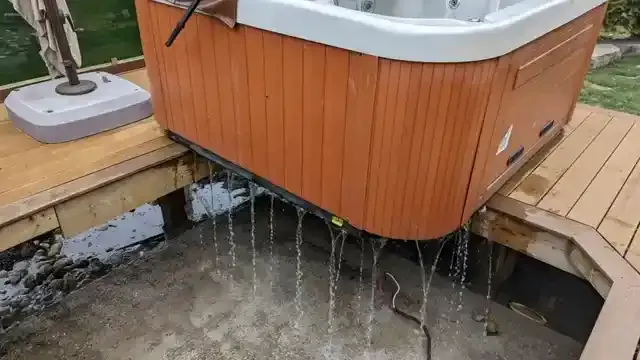
Hot tub and spa leaks in Placentia present a unique detection challenge because the elevated water temperature accelerates evaporation to a rate that is much higher than a cool swimming pool or a cold-water system. A covered spa in normal use loses water to evaporation at a measurable daily rate even with a well-fitted cover in place. Before any leak investigation begins, the baseline evaporation rate for the specific spa size and cover condition needs to be established, since the expected daily loss from evaporation in Placentia's warm climate may account for most or all of the observed water level drop without any structural or plumbing failure being present.
The bucket test adapted for spa use places a container of spa-temperature water on the first bench step, marked at the starting level, with the spa jets and blower off and the cover in the same position relative to both containers. After 24 hours, if the spa level has dropped more than the container level, water is escaping the spa from a source beyond evaporation. The bucket test for spas must be run with the jets and heater off to eliminate the pump-side and heater-side connections as active variables during the test period.
For a Placentia spa that is losing more water than evaporation accounts for, or for any visible leak at the equipment pad or jet manifold fittings, call (714) 750-8637 for a same-day inspection appointment.
Jet Manifold and Union Connection Failures
The jet manifold system that distributes water to individual spa jets is the highest-frequency leak location in Placentia hot tubs and spas. The PVC manifold runs inside the spa cabinet and connects to each jet body through a series of flexible hose connections or rigid PVC branches. Each connection point is a potential leak location: union fittings at the manifold header, flexible hose barb connections at individual jets, and the jet body-to-shell connection where the jet housing is bonded to the acrylic or gunite shell. Golden State Water's 12 to 18 grain hard water deposits scale on the O-rings inside union fittings, preventing the O-ring from sealing cleanly and causing the union to weep when the system is at operating pressure. Manifold union O-ring replacement is the most common spa repair in Placentia homes where the spa water chemistry has not included softening treatment.
Spa losing water faster than evaporation accounts for? Call for same-day spa inspection.
(714) 750-8637Shell and Equipment Pad Leaks
Acrylic shell hot tubs develop hairline cracks at the structural stress points: the corners of the shell where the acrylic over the fiberglass substrate bends, the jet body locations where the shell is drilled and the jet housing is bonded, and the skimmer opening perimeter. These cracks are typically very small and may be below the waterline and out of sight. Dye testing at each jet body, at the skimmer, and at the shell corners confirms whether water is moving through any of these structural penetrations during the test period.
Equipment pad leaks at the spa pump, heater, blower, or filter connections are visible at the equipment cabinet and are the simplest category to confirm. Union fittings that connect the pump, heater, and filter to the plumbing system use rubber O-rings that scale and degrade under hard-water conditions. The blower connection where air is injected into the jet circuit is also a common failure point when the blower check valve wears and allows water to backflow into the blower housing. For the broader pool and spa assessment when the spa is plumbed as part of a combined inground pool system, both the pool and spa circuits need assessment in the same visit. For general pool leak detection methods that also apply to spa shells and plumbing, see that page for the shared diagnostic framework.
Hot tub and spa leak detection across all Placentia neighborhoods and adjacent North OC cities. Call (714) 750-8637 for bucket test confirmation and manifold inspection at any hour.
| Build Era | Supply & Drain Material | Representative Neighborhoods |
|---|---|---|
| Pre-1950 citrus-era | Galvanized supply lines and cast iron drains | Old Town Placentia, Downtown Placentia, Atwood |
| 1950s to 1960s post-war | Copper supply lines now in deep pinhole-failure range after 60 to 70 years of hard-water exposure | North Placentia, South Placentia, West Placentia, +1 more |
| 1970s to 1980s expansion-era | Copper supply lines in mid-failure range, some polybutylene gray plastic pipe | East Placentia, Bradford Place, Tuffree Park Area, +2 more |
| 1990s and newer | PEX dominant with some copper hybrid, PVC drains | Camino Loma Verde, Sanchez Reservoir Area |
Frequently Asked Questions
How much water should a Placentia spa lose per day from evaporation?
A covered spa in Placentia's inland North OC climate typically loses 1 to 2 inches of water per week from evaporation when the water is maintained at normal spa temperature. An uncovered spa or one with a poorly fitting cover loses significantly more. Any loss that exceeds 2 inches per week with the cover in place warrants a bucket test to confirm whether the excess is a leak.
Why do hot tub union fittings leak in Placentia's water?
Union fittings on hot tub plumbing use rubber O-rings to seal the connection between the two union halves. Golden State Water's 12 to 18 grain hard water deposits calcium scale on the O-ring sealing surface, preventing the O-ring from conforming to the fitting face. The scale layer creates a gap that allows water to weep through the union under operating pressure. O-ring replacement with a new O-ring resolves this, but the new O-ring will experience the same scale buildup without water softening treatment in the spa.
Can I find a spa leak without draining the water?
Yes for most leak locations. Dye testing at jet bodies, skimmer openings, and shell corners is performed with the spa full and the jets off. Equipment pad leaks are visible from outside the cabinet without any water removal. Manifold union leaks are accessible by opening the equipment cabinet access panel with the system at pressure. Shell cracks below the skimmer level do require partial draining to expose the crack area for dye testing.
How does a blower check valve failure cause a hot tub leak?
The blower injects air into the jet circuit to create the bubbling effect in spa jets. A check valve in the blower circuit prevents water from backflowing into the blower when the blower is off and the jets are pressurized. When the check valve wears or scales shut in the open position, water enters the blower housing and can overflow from the blower air inlet, producing a water release inside the equipment cabinet.
To schedule service, call (714) 750-8637. CSLB licensed leak detection specialists serving all of North Orange County.
Call Placentia Leak Repair Experts
24/7 detection and repair across North Orange County. CSLB licensed.
24/7 Emergency Response | CSLB Licensed | Old Town to Kraemer Corridor