Bathtub Leak Detection & Repair in Placentia, CA
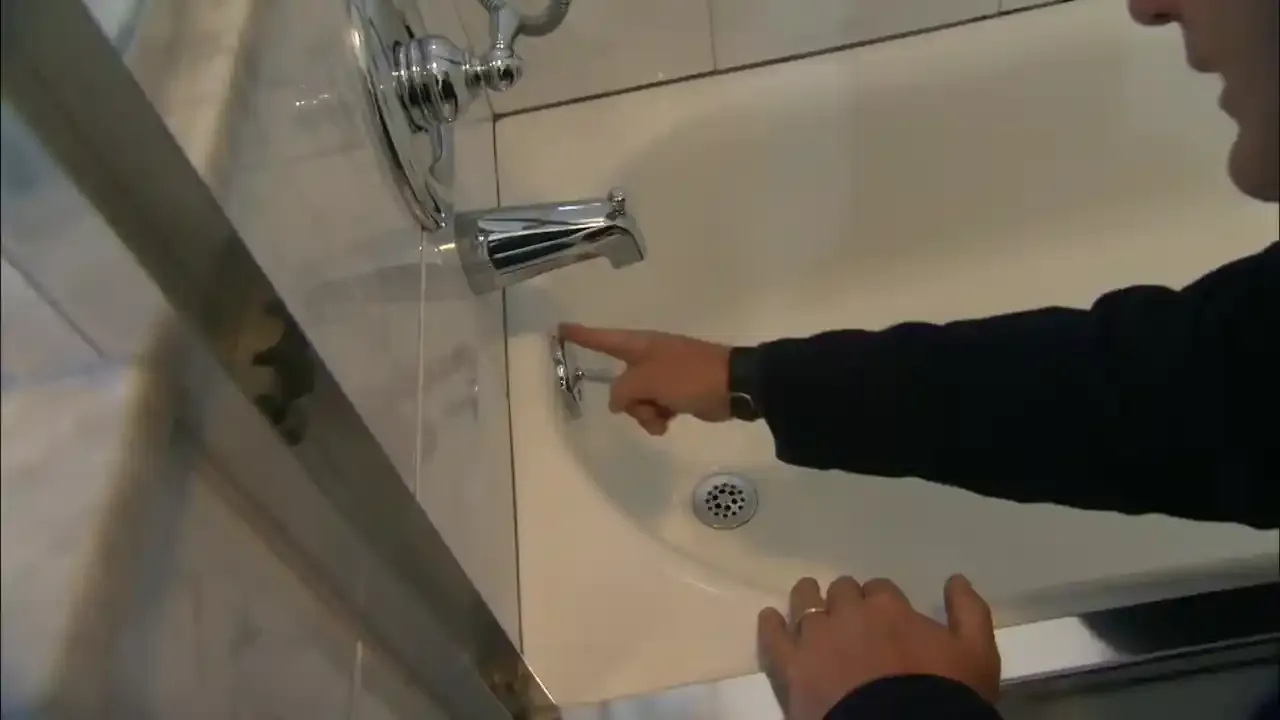
Bathtub leaks in Placentia slab homes present at several distinct locations that each require different diagnostic confirmation before any wall or floor is opened. The most common bathtub leak sources are the drain and overflow assembly beneath the tub, the caulk joint at the tub-to-tile or tub-to-wall interface, the supply valve and diverter valve inside the wall, and the tub body itself at hairline cracks that develop in acrylic or fiberglass tub materials over decades of use. Identifying the actual source before repair avoids the common outcome of resealing the caulk joint when the actual failure is the overflow plate gasket, or replacing the faucet cartridge when the actual failure is the tub drain assembly beneath the floor.
Bathtub drain and overflow assembly failures are the highest-frequency source in Placentia's 1950s to 1970s housing. The trip-lever overflow mechanism that connects the overflow plate to the drain stopper linkage runs inside the wall cavity between the overflow opening and the drain. The overflow plate gasket, which seals the plate against the tub wall at the overflow opening, deteriorates with age and hard-water mineral exposure. When the gasket fails, water that reaches the overflow level during filling escapes behind the tub and releases into the wall cavity. The failure is most active during full-depth bathing and may go undetected until a ceiling stain appears in the room below or a wet wall is discovered adjacent to the tub end.
For bathtub leak diagnosis in any Placentia home, call (714) 750-8637. We identify the source before any tile or wall surface is opened.
Testing the Bathtub Drain and Overflow
The drain and overflow assembly can be tested by plugging the overflow opening with a flat plate and rubber gasket, filling the tub to just below the overflow opening, and watching for water movement or moisture at the wall below the tub. If the tub holds water with the overflow plugged but drains when the overflow plug is removed without the tub being fully drained, the overflow gasket is confirmed as the failure point. If the tub drains with the drain plugged and the overflow covered, the failure is in the drain body and trap beneath the tub, which in a slab home is embedded in the concrete. Camera inspection from the drain opening confirms the drain body condition below the slab.
For drain failures that extend below the tub and into the sub-slab drain branch, see our drain leak detection page. For failures that involve the shower diverter valve in a combined tub-shower unit, see our shower leak detection page.
Call for same-day service across all of North Orange County.
(714) 750-8637Caulk Joint Failures in Placentia Bathrooms
The caulk joint between the bathtub rim and the adjacent tile or wall surface is a maintenance item that is regularly overlooked in Placentia bathrooms. Silicone caulk shrinks with age and can separate from the tub rim or the tile surface, creating a gap that allows water from bathing splash to run behind the tub deck and into the wall cavity below. The failure is most active in bathrooms where the tub is used frequently and where the splash zone is large. A failed caulk joint that has been admitting water for months may have already saturated the wall cavity and produced mold in the building materials behind the tile before the gap itself is noticed. Moisture meter readings at the wall below the caulk line identify whether the wall cavity is already involved.
Recaulking a bathtub joint where the wall cavity is already wet traps moisture inside the wall rather than stopping further infiltration. The correct sequence is: confirm via moisture meter whether the wall is already wet, dry the cavity if needed, then recaulk. For wall cavity moisture that has spread beyond the immediate bathtub surround, see our wall leak detection page for the damage extent assessment.
Bathtub leak detection and repair across all Placentia neighborhoods and adjacent North OC cities. Call (714) 750-8637 for same-day scheduling or emergency response.
| Build Era | Supply & Drain Material | Representative Neighborhoods |
|---|---|---|
| Pre-1950 citrus-era | Galvanized supply lines and cast iron drains | Old Town Placentia, Downtown Placentia, Atwood |
| 1950s to 1960s post-war | Copper supply lines now in deep pinhole-failure range after 60 to 70 years of hard-water exposure | North Placentia, South Placentia, West Placentia, +1 more |
| 1970s to 1980s expansion-era | Copper supply lines in mid-failure range, some polybutylene gray plastic pipe | East Placentia, Bradford Place, Tuffree Park Area, +2 more |
| 1990s and newer | PEX dominant with some copper hybrid, PVC drains | Camino Loma Verde, Sanchez Reservoir Area |
Frequently Asked Questions
How do I test if my bathtub overflow plate is leaking?
Cover the overflow opening with a flat rubber plug or a temporary plate and gasket. Fill the tub to near the overflow opening and hold the level there for 15 minutes. Then remove the overflow cover and watch whether water runs out of the opening more than a normal trickle. If the tub held water with the overflow covered but releases it immediately when the overflow is opened, the overflow gasket is the failure point.
Why is there a stain on my ceiling below the bathroom?
A ceiling stain directly below a bathtub or toilet in a Placentia two-story home most commonly traces to a drain assembly leak, an overflow plate gasket failure, or a wax ring failure at the toilet. These fail during fixture use and drip into the ceiling cavity below. A continuous stain that does not relate to fixture use timing suggests a supply valve or supply line leak in the wall above the stained area.
Can I fix a bathtub drain leak without jackhammering the slab?
For a drain body failure at or above the slab surface, repair is typically accessible through the floor drain opening or through an access panel in an adjacent closet wall. For a sub-slab drain branch failure confirmed by camera inspection, trenchless pipe lining may address the failure without concrete removal depending on the pipe material, failure type, and geometry.
How often should bathtub caulk be replaced?
Silicone caulk in a regularly used bathtub surround typically needs replacement every 5 to 7 years in normal use. In Placentia bathrooms where the 12 to 18 grain hard water leaves mineral deposits on the caulk surface, the visual appearance of the caulk may look clean while the adhesion to the tub rim has already separated. Annual inspection by pressing the caulk bead to test adhesion is more reliable than visual inspection alone.
To schedule service, call (714) 750-8637. CSLB licensed leak detection specialists serving all of North Orange County.
Call Placentia Leak Repair Experts
24/7 detection and repair across North Orange County. CSLB licensed.
24/7 Emergency Response | CSLB Licensed | Old Town to Kraemer Corridor